
In a spectacular judgement, the Supreme Court ruled that private school managements will now have to pay gratuity to all teachers who retired after 3rd April, 1997 or had rendered service of not less than five years at the time of termination of their services for various reasons.
The Supreme Court on Monday upheld the amendment to the Payment of Gratuity (PAG) Act that extended the benefit of gratuity to teachers including those in private schools.
[ Independent Schools’ Federation of India (Regd.) vs Union of India and Anr.] 30-Aug-2022
Gratuity is payable if a company has 10 or more employees:
Establishments with a staff of 10 or more than 10 workers on a single day in the previous 12 months are subject to pay gratuity. Even if the staffs of the company are reduced to below 10, it will still be liable to pay the gratuity, as per the Gratuity Act.
Employees have to serve at least 5 years of service to be eligible for gratuity:
Staffs who have completed 5 years of service in the establishment are eligible for gratuity.
Calculation of gratuity is covered under the act:
Gratuity = (15× last drawn salary × number of completed years of service)/26
- The last drawn salary comprises basic and dearness allowance (DA) and no other part will be included in the salary.
- Completed years of service comprise any year where an employee has rendered services for more than six month.
Generally, gratuity is paid after retirement but one can avail of gratuity under certain conditions such as:
One can ask for gratuity while switching jobs after completing 5 years of service in the company.
If an employee dies while in service, the gratuity amount will be paid to the nominee or legal heir.
An employee is entitled to gratuity on his disablement due to an accident or a disease.
An employee is entitled to get gratuity if he has opted for VRS.
Gratuity is payable to an employee even on the termination of his employment but one cannot claim gratuity in case of fraud, theft, assault, rape, or molestation.
Gratuity paid to a legal heir or widow of an employee will be exempted from tax:
When an employee passes away, the gratuity paid to his wife or legal heir will be exempt from tax.
Gratuity up to 20 lakhs is exempted from taxation:
Gratuity up to 20 lakhs is exempted from taxation which is paid by the organization that comes under the Payment of Gratuity Act, 1972, and the gratuity payment which comes under central, state, and local government bodies are exempted from taxation as per gratuity rules 2021.
Employers cannot deny paying gratitude to their employees even during bankruptcy:
An organization must pay gratuity to its employees even during bankruptcy and no court order can stop an employee from availing of the benefits of gratuity payment.
Source : Google
SC directs private schools to pay gratuity within six weeks
In a judgment delivered on Tuesday, court upholds validity of Parliament’s amendment to the Payment of Gratuity Act, 1972
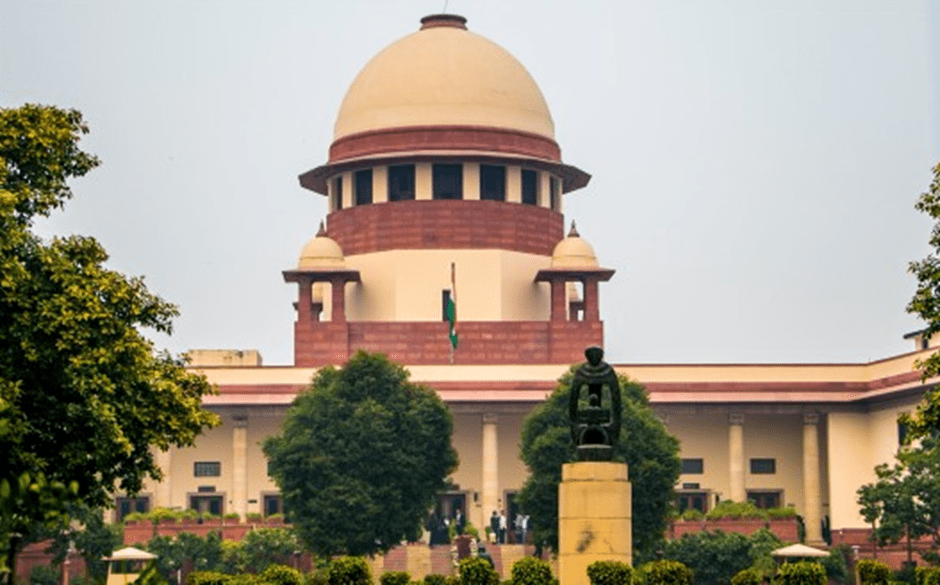
The Supreme Court has directed all private schools to pay teachers within six weeks gratuity with retrospective effect from April 3, 1997, along with interest. In a judgment delivered on Tuesday, the court upheld the validity of Parliament’s amendment to the Payment of Gratuity Act, 1972, including teachers under the purview of “employee” and making it mandatory for private schools to pay gratuity to those eligible.
The Payment of Gratuity (Amendment) Act, 2009, inserted Section 13A to amend Section 2(e) of the original act that had left teachers out of the ambit of those it considers an “employee”. The amended act said its retrospective reach would be from April 3, 1997.
Dismissing a challenge to the amendment from private schools and entities associated with them, a bench of Justices Sanjiv Khanna and Bela M. Trivedi said the inclusion “remedies the injustice and discrimination suffered by the teachers on account of a legislative mistake”.
It said gratuity was “one of the minimal conditions of service”.
“The amendment seeks to bring equality and give fair treatment to the teachers. It can hardly be categorised as an arbitrary and high-handed exercise,” the Supreme Court said.
“The appeals, transfer case and the writ petitions are dismissed. The stay orders… are vacated. The private schools would make payment to the employees/teachers along with the interest in accordance with the provisions of the PAG Act within a period of 6 weeks from today and in case of default, the employees/teachers may move the appropriate forum to enforce payment in accordance with the provisions of the PAG Act,” the bench said in the judgment dated August 30.
The court dismissed a batch of appeals filed by the Independent Schools’ Federation of India and various other private educational institutions challenging the amendment as being arbitrary and in violation of their fundamental rights guaranteed under Articles 14 (equality), 19(1)(g) (right to practice any profession), 21 (life and personal liberty) and 300A (no person can be deprived of property except by due authority of law) of the Constitution.
However, because of technical lacunae, private school teachers were excluded from the benefit of gratuity. In 2004 the apex court had in the Ahmedabad Private Primary Teachers’ Association vs Union of India case held that the Payment of Gratuity Act would not apply to teachers as they were not included in its definition of an “employee”. However, the court had said it was for Parliament to include teachers in the Act.
However, because of technical lacunae, private school teachers were excluded from the benefit of gratuity. In 2004 the apex court had in the Ahmedabad Private Primary Teachers’ Association vs Union of India case held that the Payment of Gratuity Act would not apply to teachers as they were not included in its definition of an “employee”. However, the court had said it was for Parliament to include teachers in the Act.
Consequent to the judgment, Parliament in 2004 brought teachers under the ambit of the act, which was challenged by school managements and the legal tangle continued for over 18 years.
Upholding the amendment, Justice Khanna, who authored the judgment, said: “When the legislature acts within its power to usher in a valid law and rectify a legal error, even after a court ruling, the legislature exercises its constitutional power to enact the law and does not overrule an earlier court decision.
“The schools have claimed violation of Articles 14, 19(1)(g), 21 and 300A of the Constitution of India which, in our opinion, are not violated….” The Supreme Court added: “The amendment with retrospective effect remedies the injustice and discrimination suffered by the teachers on account of a legislative mistake, which was understood after the pronouncement of the judgment in Ahmedabad Private Primary Teachers’ Association (supra).”
Justice Khanna said the amendment was necessary to ensure that something that was due and payable to teachers was not denied to them because of a defect in the statute.
“Payment of gratuity cannot be categorised as a windfall or a bounty payable by the private schools as it is one of the minimal conditions of service. In this background, the argument of the private schools that they do not have capacity and ability to pay gratuity to the teachers is unapt and parsimonious,” the court said.
It added: “The power to amend, which includes the power to amend the statute with retrospective effect, is a constitutional power vested with the legislature, which is not confined and restricted to any particular type of statutes, namely tax statutes. We would not accept any attempt to circumscribe and limit the power vested with the sovereign legislature, thereby putting fetters when such fetters are not prescribed by the Constitution.”
I end by thanking a special person, Mr. Maruti Sawant. Ex- Secretary of Shreerang Education Society and Chairman of School Committee Secondary Section who had the foresight to prepare a resolution in the Secondary English School Committee for payment of gratuity to staff along with SBI Pension Scheme with one thousand per month by employee and same amount by employers. To the best of my knowledge, he and his committee of SES had made an FD of 50 lakhs for staff gratuity.
People criticized him for his position in the bank and said he was not appropriate for the post of Secretary, but he was the only one who thought for the staff and did something concrete for their welfare. He fought for the rights of the staff and saved the services of many, I don’t want to name but hope they remember and be grateful to him for his contribution towards them.
He was the only Secretary, who was humble enough to ask for forgiveness to a Junior Clerk of Secondary Section, whom he felt he had wronged by favoring others.
But as is the case always with Shreerang, as the Committee changes, the decisions change and the SBI Pension Scheme was discontinued and probably, the F.D would have been dismantled too.
Very thankful to the Supreme Court Judges who thought of the teachers and gave a boost to the teaching profession and inspite of a very powerful lobby of Private Managements, passed a Judgement in favour of the Teachers of Private schools who are always given step motherly treatment.
At least now the teaching fraternity of Private Schools can live their retired lives with their head held high without being in a sorry plight of affairs.
SO ALL THOSE WHO ARE ELIGIBLE, PLEASE DEMAND YOUR DUES IN FORM I AND SUBMIT TO THE TRUST IF YOU HAVE NOT GONE FOR LEGAL ACTION YET.
FORMAT OF FORM I
Form – ‘I’
To,
The Secretary,
_________________
_________________
Sir/ Madam,
I beg to apply for Payment of Gratuity to which I am entitled under sub – section (1) of Section 4 of the Payment of Gratuity Act, 1972 on account of my retirement / resignation/VRS after completion of not less than 5 years of continuous service. Necessary particulars relating to my appointment in the school are given in the statement below: –
STATEMENT
- Name in full:
- Address in full:
- Last Employed as:
- Post held with Ticket
No. or Serial No. if any:
- Date of Appointment:
- Total period of service:
- Amount of wages last drawn:
- Total Amount of Gratuity:
- Payment to be made in
cash/ open crossed bank cheque:
Yours faithfully,
(Mr/Mrs. )
Contact:
Place:
Date:
C.C: The Head Mistress / Principal,
________________________
________________________
 Art Of Teaching
Leave a comment