Hinduism offers us with abundant methods of praying to the spirit of the Almighty. One of them is the Tantra worship. The Tantra worship of Devi-shakti (deities) is referred to as a Vidya. The Ten Mahavidyas represent the ten major goddess forms. [ There are more than 18 Mahavidyas but this write-up will limit to ten of them]
The female mysticism is an authoritative being. From mother nurturers to the slayers, from information to prosperity, they incorporate all features of the physical and mystical dominion. A fragment of such a commanding being is the Mahavidya. It is a belief that Goddess Parvati has ten or more celestial appearances known as the Mahavidyas and each of these opulence’s represent her supreme splendour. These Mahavidyas also known as Knowledge Giving Goddesses, signify diverse features of mysticism determined on supervising the path of the mystical searcher to deliverance or liberation. For those devotionally minded seekers, these forms can be approached with an essence of veneration, love, and growing understanding. For the knowledge-oriented seekers, the similar forms can signify numerous situations of internal arising along the pathway to illumination and insight. Goddess Parvati, in her Dasa Mahavidya avatar, upholds the balance between these powers, guaranteeing impartiality. The feminine energy is Shakti, representing the Trinity: Brahma, Vishnu, and Shiva, and is also the source of Maya, the majestic illusion. Shakti divides into the Dasa Mahavidyas, ten tantric goddesses, leading seekers on a path that could reveal both beauty and danger, conditional on their viewpoint.
Let us understand the essence of the Mahavidyas: –
- The First Mahavidya is Goddess Kali:
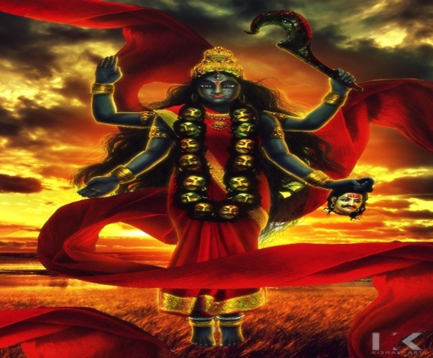
Ma Kali is the conclusive system of Brahman, “Devourer of Time” and the supreme deity of the Kalikula System. Mahakali is of a jet-black appearance. Her three eyes represent the past, present and future. She has vivid snowy, fang-like teeth, a wide mouth, and her red, blood-stained tongue showing from there. She has released, messy hairs. She is seen wearing a garland made of skulls and a garland of red hibiscus flowers around her neck. Her ornaments are skeletal bones, skeletal hands as well as disengaged arms and hands as a girdle around her waist. She adorns four hands, two of which are empty and the other two carry a machete and a demon head. Commonly known as Maha Kali she is the Hindu Divinity of annihilation and end of the world. She is defined as one of the fiercest of the Deities of widespread supremacy, time, life, death, including rebirth and liberation.
2.The Second Mahavidya is Goddess Tara:
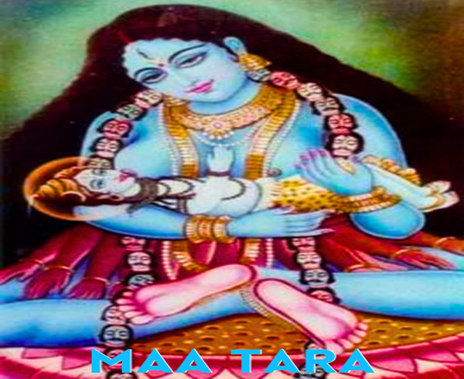
The second Mahavidya is Goddess Tara which means a star. She is beautiful to look at but self – combusting continuously. She personifies unappeasable hunger that boosts life. She is also known as Neel – Saraswati and she carries the weapons mainly Khadga, sword, and a pair of scissors. The mythology says that when the milky sea was churned, Lord Shiva drank the poison to save the world. But due to the effect of the powerful poison, he fell unconscious. Here, Ma Durga appeared as Ma Tara and after taking Lord Shiva on her lap like a child breastfed him for counteracting the effect of poison. It is said that Ma Tara is more amicable in nature because of her motherly nature.
3.The Third Mahavidya is Goddess Shodashi. Also known as Lalita Tripura Sundari
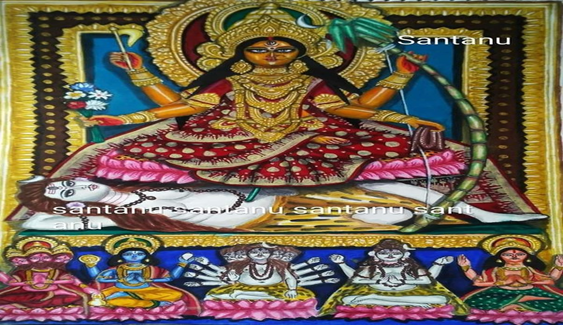
She is Ma Tripura Sundari, and as the name suggests most beautiful in all three worlds.She embodies Goddess Parvati and therefore known as Tantric Parvati. She is also called Lalita [The one who plays] and Rajarajeshwari [Queen of Queens]. She has a darkish appearance, and seen to be in union with Lord Shiva as they are seen to be on the bed, having a throne which is supported by Brahma, Rudra, Ishana, Sadashiva creating the board. People perform Shodashi Sadhana for desire, deliverance and strength.
4.Goddess Bhubaneshwari:
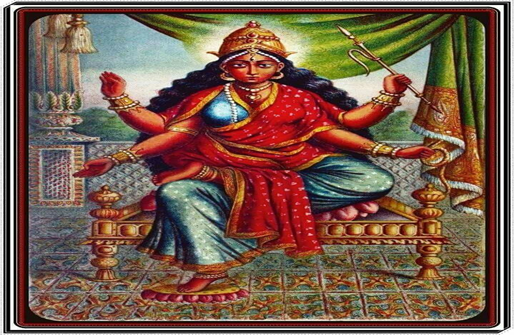
She is the fourth Mahavidya. We revere her as Adi Shakti, a former form of Goddess Shakti. She is the extensive strength of Parashakti, which demonstrates the phenomenal and avaricious ecospheres. Her sanctified designation symbolically is the combined arrangement of the words Bhuvana and Ishwari, which means World Goddess. The tri- Bhuvan, i.e., the three worlds are Bhuh which means Earth, bhuvah signifying atmosphere and svah meaning Heaven. The Goddess enjoys all elements of the physical universe and its extension out there. She is incarnated as having three eyes portraying her familiarity of the three worlds, with very large breasts indicating the nourishing of all beings with the spirit of life and a empathetic face with red lips like Bimba fruits, [Ivy Gourd]. She retrieves individuals from the grasps of misconception which results in ultimate modification in body chemistry and the soul with the achievement of illumination.
5.Goddess Bhairavi:
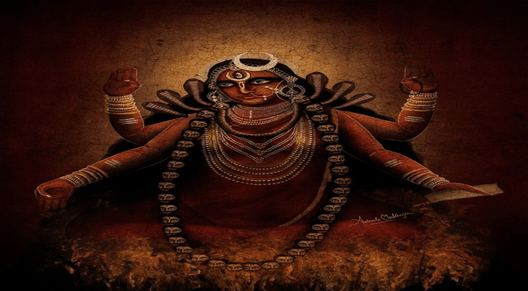
Goddess Bhairavi is also known as the female version of God Bhairav. She is the embodiment of the fierce goddess. Goddess Bhairavi has a scorching, volcanic bloodshot appearance with three furious eyes and messy hair. Her hair is in a bun with a crescent moon decoration. She beautifies herself with two horns on each side. She also has two protruding tusks from the ends of her bloody mouth. Her clothes are red and blue in colour and wears a garland of skulls around her neck. Linga Bhairavi is a form of Ma Bhairavi who characterizes innovative and developmental features of the cosmos. She is said to be the ultimate figurehead of the 24 yoginis [ Aesthetic females].
6] Ma Chhinnamasta
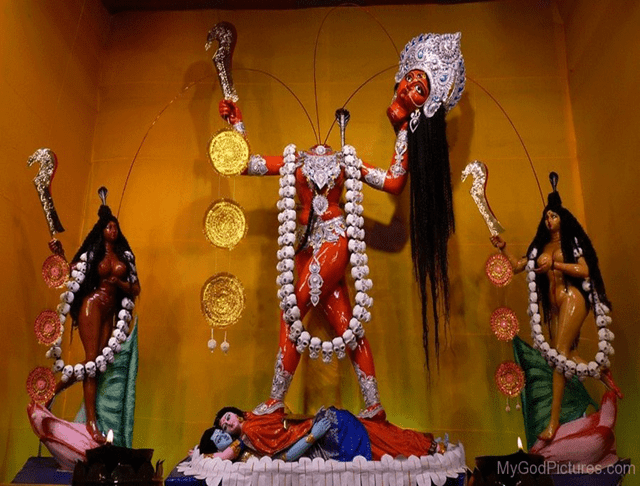
Mata Chhinnamasta is Prachanda Chandika or Jogani Ma. She is the violent Swarupa of Mata Parvati. She is the 6th Mahavidya ‘Chhinnamasta’ means one whose head is separated. She is self-decapitated. Ma Chhinnamasta stands on Kamadeva and Rati (which symbolize desires). She signifies lifespan, immortality and the process of recreation within the three worlds. To satisfy her attendants Jaya and Vijaya respectively, she hacked off her own head. Chinnamasta has a red complexion, personified with a fearsome appearance. She has dishevelled hair, four hands, two of which hold a sword and another hand holding her own severed head, three blazing eyes with a fearsome expression and wearing a crown. Mata Chhinnamasta has a reddish complexion like the Hibiscus flower and glowing like millions of Suns. She is slender and 16-year-old who is ornamented with one lotus. In one of her hands, she is seen clutching her severed head and in one of her other hands we see a scimitar. One hand of hers has the skull bowl. Ma Chhinnamasta is the presenter of redemption.
7] Goddess Dhumavati:
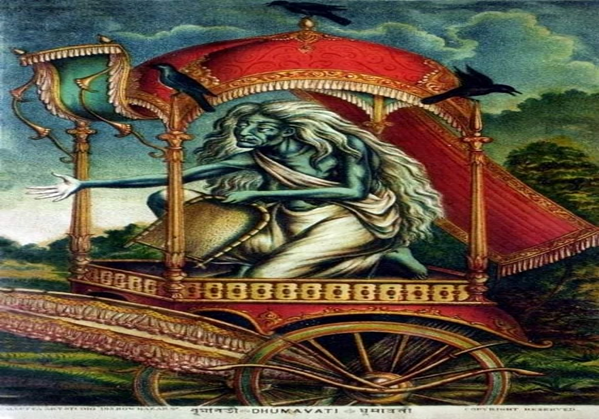
Dhumavati is of a smoky dark brown appearance, her skin is wrinkly, her mouth is dry, some of her teeth have fallen out, her long dishevelled hair is Gray, her eyes are seen as bloodshot and she has a terrifying appearance, which is seen as a combined cause of anger, misery, fear, exhaustion, restlessness, constant hunger and thirst. She wears white clothes, put on in the outfit of a widow. Dhumavati is acknowledged with Alakshmi, the goddess of bad luck, conflict, and shortage. The Devi has no jewellery on her body, only murky and old clothes. In her representations she is shown riding a horseless chariot, while holding a sifting basket in one hand and her other hand fixed in a mudra of knowledge giving sign. The smoke around Ma Dhumavati represents the result of fire, annihilation, and change. This shows the impermanency of nature of life and the cleansing that comes along with destruction. The smoke causing fire is representation of doing away and abolishing the old and the creation of new positive power. Dhumavati stands for this destructive power.
8] Ma Bagalamukhi:
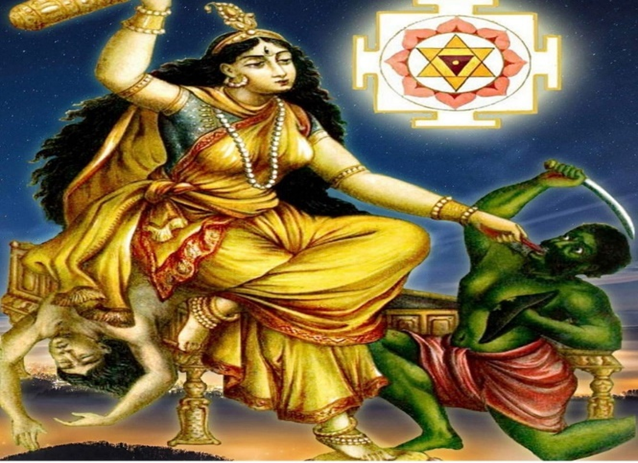
Goddess Bagalamukhi has a liquefied gold appearance with three bright eyes, lush black hair and a benevolent appearance. She is seen wearing yellow clothes and attire. She is decorated with yellow ornaments on her limbs. We can see her holding a mace and also, she holds the Demon Madnasur by his tongue with an intention to keep him at a distance.
Goddess Baglamukhi, also known as Pitambara. She is believed to be the eighth avatar of Goddess Durga and is worshipped for her capability to provide protection and liberation from negativity and obstacles.
We know Ma Bagalamukhi who is considered a violent Goddess, wearing yellow-coloured clothes and having a superb appearance. She is ornamented with a crown of snakes.
She has the ability to silence and control negative forces in the lives of her devotees related to enemies and court cases. The worship of Baglamukhi involves the chanting of mantras and the offering of flowers, fruits, and other items. To obtain these it is important to execute precise rites which can help the devotees to overcome hindrances and negative encounters in life.
9] Ma Matangi:
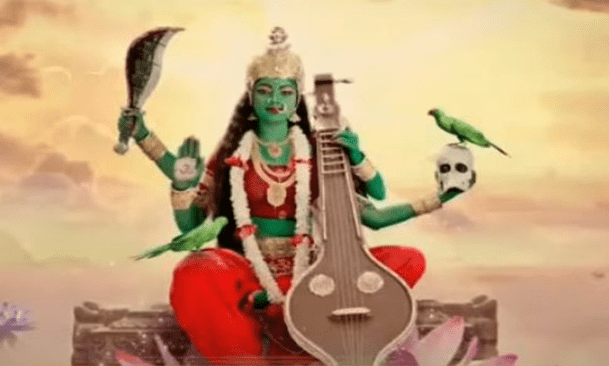
She is considered to be the Tantric form of Goddess Saraswati, the goddess of music and learning. Matangi rules over speech, music, knowledge and the arts. Her worship is arranged to obtain paranormal influences, especially gaining control over opponents, enticing people to oneself, gaining command over the arts and acquisition of highest knowledge. Matangi is connected with contamination, lack of propitiousness and the margin of Hindu society. Matangi—the uninhabited and elated recluse—symbolizes the “unexpected” outside the limitations of conventional civilization, especially internal information. Matangi is also associated with Lord Ganesha, the elephant-headed god of knowledge and obstacle elimination.
10] Ma Kamala
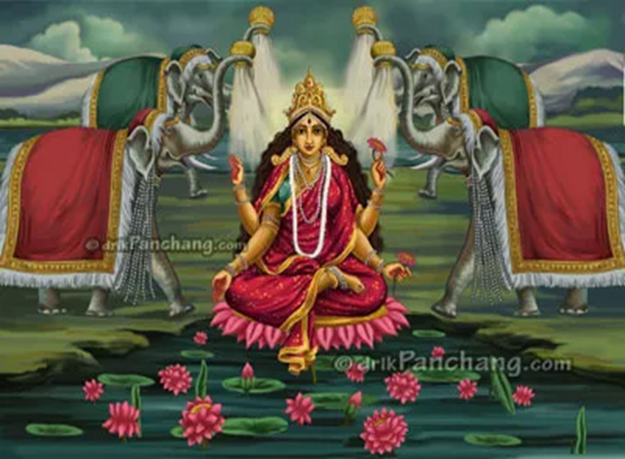
We consider Ma Kamala as the tenth Mahavidya. Goddess Kamala is considered as the most superlative form of the goddess. She is not only compared with Lakshmi, the Goddess of wealth but also considered to be Goddess Lakshmi. She is known as Tantric Lakshmi. The goddess in the form of Kamala confers affluence and wealth, lushness and harvests, and good luck. The abundance of Dhan [wealth] and Dhanya [ Grain] is due to her worship. Goddess Kamala is shown in red dress and extravagantly decorated with golden jewellery. She has golden appearance. She is portrayed with four arms In the left two arms she holds the lotus flowers, whereas with the other two arms she is seen to be performing the boon- giving Varada Mudra and the being- fearless Abhya Mudra. She is fringed by four elephants who are shown giving Abhishekam to Goddess Kamala who is sitting in the midst of the ocean on a lotus flower.
I conclude by saying that the 10 Mahavidyas are the ten tantric goddesses in Hinduism who represent the 10 different aspects of Adi Parashakti or the Supreme Mother Goddess.
Different aspects of Ma AdiShakti are personified by the ten Mahavidyas with a view to grant different types of remedies and power to the devotees. Their worship and sadhana is considered very powerful in Tantric practices. The Mahavidyas are worshipped through Tantric rituals to gain powers, knowledge and fulfil desires. During worship of the Mahavidyas, it is common knowledge to use the Tantras and Mantras on a large scale. The Mahavidyas reside in Manidvipa, the eternal abode of Goddess Shakti. They represent the different sides of the Divine Mother and her supreme knowledge and power. These are all about different sides of life, awareness, and the cosmos, with each Mahavidya representing a path to spiritual enlightenment or understanding.
In Shaktism, it is believed that worshipping them will help you to connect with these deeper truths, but you must know that you are actually worshipping the unavoidable truths and perceptions of the universe in a feminine form.
The Feminine form of the Deities can be revered by the devotees in any female form as mother, daughter, sister, friend, lover or wife. It represents the notion of polymorphism.
But there are warnings in each form, a wife can be impolite with you, a lover can be envious of you, a friend can use you for their benefits, a sister or daughter can have their own difficulties and problems.
Eventually, it’s only your mother who will endlessly love you unreservedly forfeiting everything for you. A human being is always susceptible to making mistakes either knowingly or unknowingly, but only a mother will be kind and forgiving as compared to other forms mentioned above.
Astutely, therefore it is always intelligent on one’s part to indulge and revere them as your mother.
Om Shree Matre Namaha: A verse that means “I bow to the mother”

 Art Of Teaching
Leave a comment