My younger daughter Indrani recently visited Mexico where she visited the remains of the Mayan and Aztec Civilizations. After seeing the photographs my curiosity arose and I started comparing with our Vedic civilization and was fortunate enough to render a comparative study.
Across vast oceans and separated by thousands of years, ancient civilizations developed complex societies filled with spiritual symbolism, astronomical precision, and architectural brilliance.
This is the most fascinating comparisons between the Mayan and Aztec civilizations of Mesoamerica and the Vedic [Indo-Aryan] civilization of ancient India.
While mainstream historians do not support direct contact between these cultures, the parallels in worldview and structure are compelling enough to invite deeper reflection.
A] Astronomical Precision and Cosmic Order:
The Mayans are renowned for their extraordinary accurate calendar system, capable of tracking planetary movements and predicting eclipses. Venus held particular importance in their cosmology.
Similarly, Vedic texts such as Vedanga Jyotisha and later astronomical treatises describe planetary alignments, lunar constellations [Nakshatras] and detailed calculations of cosmic cycles known as Yugas.
Both Civilizations viewed time as cyclical rather than linear – a profound philosophical alignment that shaped their rituals and world view.
B] Monumental Sacred Architecture:
Mayan and Aztec step pyramids were not merely political symbols but cosmological statements. Structures like Chichen Itza were aligned with equinoxes and solstices, demonstrating advanced astronomical knowledge.
In India, temple architecture followed strict geometric principles described in Vastu Shastra. Many temples symbolized Mount Meru, the cosmic axis in Hindu cosmology. The vertical structure of temples symbolized ascent from earthly existence to divine consciousness.
Both civilizations encoded Cosmic understanding into stone.
C] Solar Centrality in Spiritual Life:
The Sun occupied a central place in both traditions.
The Aztecs worshipped Huitzilopochtli as a solar deity essential for cosmic survival.
In Vedic Culture, Surya Was revered as the source of life, wisdom and illumination. The Gayatri Mantra Invokes solar energy as divine intelligence.
Solar reverence reflected dependence on agricultural cycles and deeper metaphysical symbolism- the Sun as life- force.
D] Ritual, Sacrifice and Cosmic Balance:
Aztec rituals famously included human sacrifice , intended to sustain cosmic equilibrium.
In early Vedic traditions, Yajnas [fire rituals] were performed to maintain harmony between humans and cosmic forces. While generally symbolic or involving offerings such as grains or animals, the underlying philosophy also centered on sustaining universal balance.
The idea that the cosmos requires conscious participation is a shared theme.
E] Cycles of Creation and Destruction:
Mayan cosmology describes multiple creations and destructions of the world.
Hindu cosmology similarly speaks of recurring cycles governed by Brahma [Creation], Vishnu [Preservation], and Shiva [Destruction].
The concept of Yugas represents moral and spiritual cycles of humanity.
Time was not an arrow moving forward – it was a wheel.
F] The Priest- Warrior Structure:
Both societies were structured around:
- Priestly knowledge keepers
- Warrior Elites
- Agricultural Foundations
Power was justified through Cosmic Order.
SO, WHAT DOES THIS MEAN?
Mainstream archaeology states there is no concrete evidence of contact between Ancient India and Mesoamerica.
But here are possibilities of debate between scholars and alternative researchers.
- Independent development due to similar agricultural needs.
- Human cognitive patterns naturally generating similar myth structures.
- Lost ancient maritime connections. [a minority hypothesis]
- Shared archetypes embedded in human consciousness.
Final Reflection:
Perhaps these similarities do not prove contact.
Perhaps they prove something more powerful.
Human consciousness, when deeply observing nature , may arrive at universal truths.
Different continents.
Different languages.
Same cosmic questions.
Conclusion:
The Aztec, Mayan and Vedic civilizations remind us that human intelligence spirituality, and cosmic wonder are universal. Even across oceans, ancient cultures asked the same questions:
- Who are we?
- Where did we come from?
- How does the universe function?
Perhaps civilizations differ in language and symbols- but the quest for meaning remains the same. I end with the thought .. “Civilizations may be separated by oceans, but the sky above them is one.”
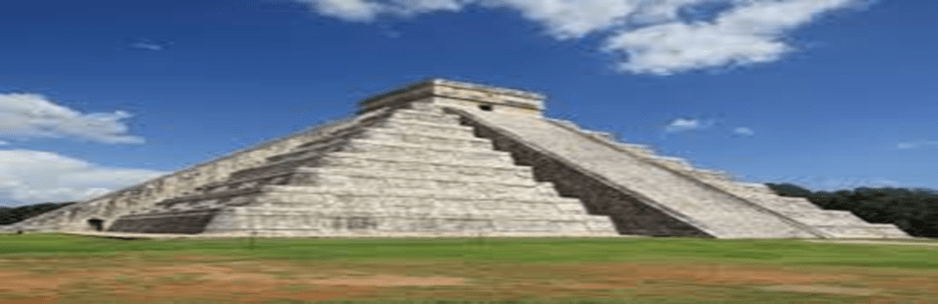
Mesoamerica pyramids
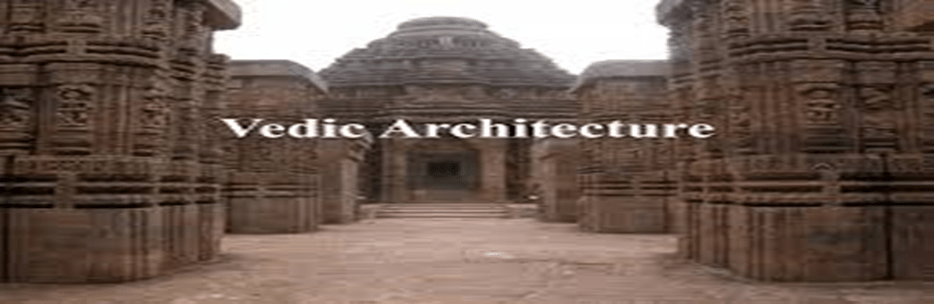
Vedic Architecture
Source: Google
References:
Aztec Civilization:
Berdan, Frances F. The Aztecs of Central Mexico: An Imperial Society. 2nd ed. Fort Worth: Harcourt Brace College Publishers, 2005.
Mayan Civilization:
Schele, Linda and David Freidel. A Forest of Kings. The Untold Story of the Ancient Maya. New York: William Morrow, 1990.
Vedic /Indo -Aryan Civilization
Thapar, Romila. Early India from the Origins to A, D 1300. Berkeley: university of California Press, 2002.
…………………………………………
 Art Of Teaching
Leave a comment