
The Wife’s Letter [Streer Patra] by Tagore is a feminist expression of a women’s predicament along with bitterness with her life. If you read the story, you will find that there are layers of issues more important than what you come upon at first reading. It is a reflection of society’s oppression to females, especially widows in the 19th century.
The protagonist Mrinal is the wife in an aristocratic, upper- caste male -controlled zamindar family. Mrinal, being from a rural background is always ridiculed for the same. But the husband’s family soon realises her intelligence. Adding a definite twist to her routine everyday life, arrives Bindu, the widowed cousin sister of Mrinal’s sister-in-law. She is tortured by her dead husband’s family which forces her to run away to her cousin sister’s house. Mrinal grows her fondness towards Bindu and this leads to tensions as Mrinal starts protecting and fighting for her with her husband’s family. Bindu is finally married off again to a mentally sick person. Bindu again runs away within three days of her second wedding and comes to Mrinal for protection. But surrendering to male – controlled rules, she is sent back to her husband’s house in spite of protests by Mrinal. Mrinal tries desperately to rescue Bindu through her brother but fails completely on receiving the news of Bindu’s suicide.
This makes her lose all conviction in the so-called foundation of family and marriage and thereafter she leaves for pilgrimage leaving her husband and family behind.
Mrinal’s account of her day-to-day existence brings out the grim picture of the dark customs binding patriarchal society. When we go into flashback, we can view the scene when both her parents are sitting in anxiety waiting for her would be husband’s uncle to approve of her as the bride to be. Here we can see that a women’s intelligence has no value in the market of marriage except for the commercialisation of beauty as an ingredient to be sold. This concept is present till date in our society, howsoever modern we may have become . The ads for beautifying a woman by a woman narrates the fact that women are women’s greatest enemies in the fight for a equal standardization of women’s prestige and values and the fact that women are not a beautiful commodity to be sold in the market of marriage.
Mrinal’s husband also negates her intelligence by asking her what is the need for her to read so many books? Whether by reading so much she will achieve the title of Raichand or Premchand.
Tagore has explicitly brought out the fact that beauty counts and not intelligence by showing how Mrinal is important only because she is beautiful and nobody gives any value to her intelligence. This can be understood when Mrinal says that her mother always used to say that her intelligence was a curse for Mrinal. This line beautifully objectifies women as a beautiful commodity to be possessed and denigrated by men. Women should not think otherwise they would be termed dangerous for the household and society at large. It is beautifully said in the line that if a woman has to follow restrictions imposed by society on her, she should not follow the dictates of her intelligence as it will lead to societal confrontations. In those times, the thought of women being intelligent to do other work except household chores was totally unfamiliar and unacceptable. An intelligent woman was considered a curse and not a boon.
Here Tagore, the pioneer of Bengal Renaissance, exposes the emptiness of the reforms caried out in the 19th century in the name of girl’s education, widow remarriage and stopping of the purdah system. Though Tagore considered Indian culture to be far above western culture, he was of the opinion that liberation and empowerment of the Bengali woman and Indian woman at large was necessary to be forcefully implemented.
The fact that western educated men wanted educated women was seen as a move again, by woman to adapt themselves to the liking of the males. There was total lack of women employing their own agency in any manner. It is a funny sight where women only are burdened with protection of the Indian culture and tradition. Also, the respectability of society was placed on the woman as a yardstick of measurement and this led to further controlling of their behaviour patterns by men. The reforms were on paper only with no real impact at the ground level. Protagonists like Mrinal faced a kind of hollowness in their lives.
The portrayal of Bindu’s death and her agonizing life leading to suicide is actually a tribute to Snehlata, who was a Bengali woman, and had set herself on fire and ended her life to save her parents from the evil called dowry. It was also a acknowledgement to the endless women who were voiceless in their agony from times immemorial and holds relevance even today.
It is true and a fact that such writings have absolutely no power to practically solve the problems of a sick society but it has the power to provide sympathy. This sympathy and a personal understanding of these problematic issues prevalent in society will lead us to understand the evils of dowry deaths, rape and honour killings to name a few and we can relate to the survivors and help them in any small way possible to get back to normal lives. Tagore has given us a platform for debate and discussion.
In Streer Potro, Mrinal wrote,
‘women felt ashamed even to feel sad…If it was the destiny of women to suffer at the hands of society, then it was better to let them wallow in neglect; love or caring merely increased the pain caused by neglect.’[Tagore, p.639 My translation.]
Thus, we can feel the plight of a woman who is relegated to the sidelines, and forever an outsider in her groom’s home and in her parent’s home too after marriage. The patriarchal society, its taboos, societal rules which are man- dominated leading to societal criticisms has today made the birth of a female child a curse to society.
Let me end with a poem by Vrinda Nabar which beautifully exposes the plight of the Indian wife and mind you, the position has not changed even today. It is always the female who has to compromise in every situation to make a relationship work. Very few men do it. The society will be equal only when the mothers teach their sons to come out of a patriarchal mindset and for that we need to educate the women first. Today we see different set of rules for daughters and daughters- in -law. The feminist equality we talk of will not come with any agitation but only by changing the societal mindset.
‘We’ve got a daughter we’re willing to sell
His is the bargain, the profit as well:
She’ll…produce brat after brat,
Forget all her youth as she spins out her life
In waddling behind him, a good Indian wife.’
(Nabar, p. 97-98.)
Mrinal’s letter to her husband telling him of her decision of never to return to the shackles of slavery of thought shows the protest of women to open their wings and fly from the bondage of societal slavery. Mrinal’s crossing over the boundary drawn up by society is an expression of her liberation of mind and thoughts. She wrote that just as Mirabai had renounced all riches and had gone in search of redemption, in the same way she was opening the shackles of family life as a sign of protest against the inhumane behaviour meted down to Bindu and also the ridiculous blaming of her in her death also as the culprit, showing no remorse or grief. Her leaving was a protest and defiance against the patriarchal norms set by society for women and the injustice of it all.
We need to salute Tagore as this short story written by him is timeless, it cannot be dated. Its relevance will always be created as generation after generation go through his writings and finds out how he projected the individuality of the woman and their challenges to the male dominated society in a veiled manner.
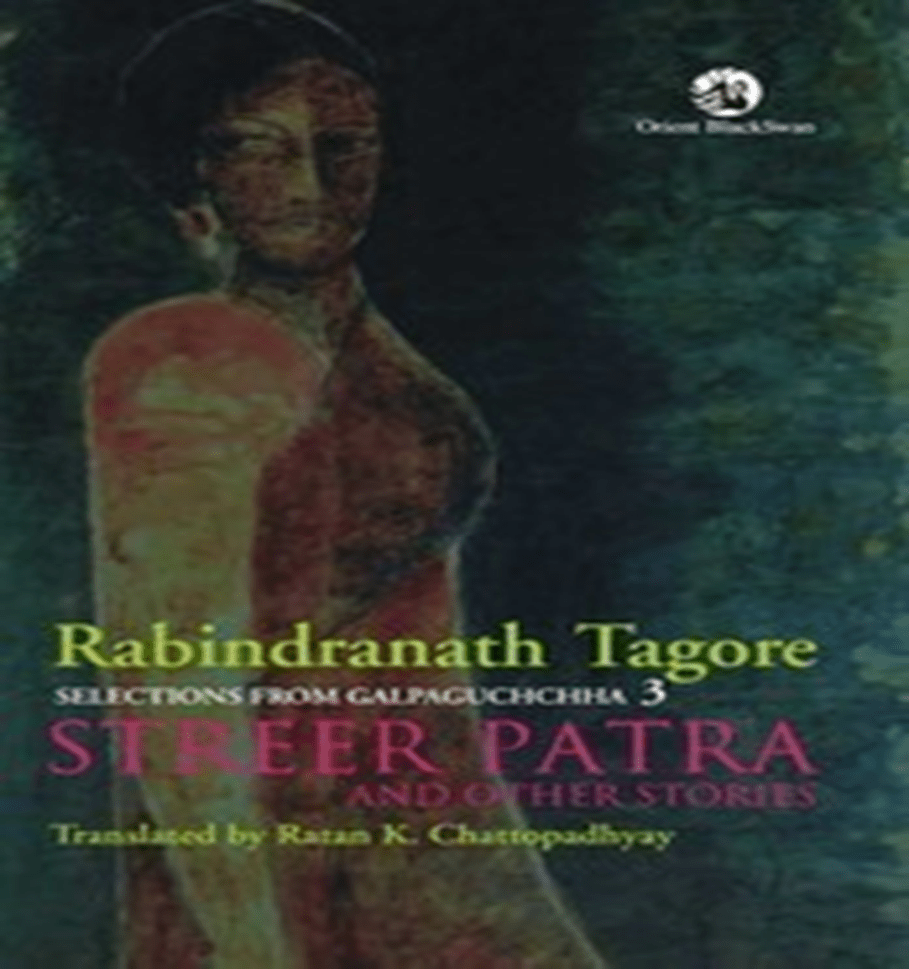
Source : Google


 Art Of Teaching
Leave a reply to indrani1212 Cancel reply