If you read about Bengal of the 19th century, it was a very different canvas for women. We see in Bengali Society of that time a mindset which strictly followed fundamental orthodoxy, deterioration and gender-based biases towards women. The women folk were forbidden from stepping out of their houses, or to intermingle with fellow males except immediate family and husband. They had to be obedient to every whim and fancy of their husbands with no ingress to education.
In such a regressive society, we come across Jnanadanandini Devi Tagore who was born in the village of Narendrapur in Jessore of Bangladesh on the 26th of July, 1850. When she was 8 years old, she was married off to Satyendra Nath Tagore as per the Gauri Daan ceremony. She was from a Kulin [High Caste] Brahmin family. It was a great prestige for the Tagore’s as Satyendra Nath became the former Indian to pass as the ICS officer.
Her marriage was the typical life of imprisonment and severe hindrance in the tunes of Purdah system which was compulsory for the Tagore womenfolk. Though her husband was strictly opposed to this, he could not raise his views in front of his powerful family.
In the year 1863 Satyendra Nath prepared to go to England on selection in the ICS exam. He was to be accompanied by his wife Jnanadanandini Devi. But the question here was what she would wear? In those days the women of Bengal just wrapped a saree around their bodies with no specific style, also she would not be allowed to wear gowns like the British ladies as it would hamper the prestige of the prestigious Tagore family of Jorasankho.
Satyendra Nath did not approve of his wife’s pathetic condition, he being quite broad minded. He felt very sad and decided to take Jnanada along with him as he was posted in Bombay Presidency as Assistant Collector and Magistrate. This was a turning point in Jnanada’s life as she got to move away from the patriarchal atmosphere.
When Jnanada came to Mumbai, her life altered totally. It was interesting and exciting to be amid people who were very different from the Tagore family.
She understood that there is a life for women outside the four walls of their house and a woman’s role was not restricted to just producing children and they could play a greater role in shaping society. She slowly and steadily started to share her learnings and ideas in her home at Jorasanko and her ideas spread across Bengal.
Her contributions to Women Empowerment and upliftment of women during the Bengal Renaissance period ranging from 1772 to 1941 can be summarized in the below mentioned points.
Saree Drape Style: –
Bengali women had a typical way of draping their sarees where no part of their face should be seen and had to be hidden under purdah which was a long ghoonghat up to the chest. It was not at all comfortable because it made any type of movement very difficult. They did not wear any blouse beneath their sarees or petticoats and therefore often fell prey to the bitter cold and were very uncomfortable in summer due to the long ghoonghat.
Jnanada therefore devised her own style of saree draping where pleats were made and tuck inside a petticoat. She also made to wear jacket style blouses with laces. In this she was inspired by the Parsee women of Mumbai.
We can see that after her return to Kolkata all Brahmo women accepted her style and it became famous as ‘Brahmika Saree’.
She introduced the concept of nuclear family: – Regular clashes were observed between her and her father-in-law Debendranath Tagore because of his patriarchal mindset. He was supported by her mother -in-law Sarada Sundari and opposed her at every step. The conflict among them drove a wide wedge in the Tagore household and she was forced to move to another bungalow along with her husband and children. Hers was the first ever nuclear family in the whole of Bengal. She did not confirm to the set norms and started a new trend for the whole of Bengal to follow.
Women Empowerment: – All the women in the Tagore household came into the family when they were child brides and were allowed to leave only after death. That was the custom. The women were forced to observe stringent traditions and follow the purdah system in the male-controlled family. They were part of the Andar Mahal and never could enter or be sighted in the Bar Mahal known as men’s quarters, they couldn’t even step foot in the front veranda or interact freely with the household servants and employees. But Jnanada followed her own rules and was perhaps the first lady in Bengal to go to England on her own. She was the reason for influential families in Bengal to relax their rules and extended their boundaries for the women folk of their household. Even the other women in the Tagore household started looking up to her. She urged the females to step out of their houses, lead a social life and contribute to the society.
Literary Pursuits: –Jnanada had the opportunity to write articles, for many periodicals and the media. Her focus was on nationalism, patriotism and freedom. She introduced a literary book for children named ‘Balak’. This book had contributions from Rabindranath Tagore.
Social clubs for women: – When she returned from England, she brought forth many new customs unfamiliar to the Bengali society. One of them was the tea and breakfast club. First, she started it in her family so that all members could share their first meal of the day together and interact with each other thereby strengthening family bonds and giving the women a platform to express their views in front of all. Instead of indulging in petty politics and gossip she encouraged among the women intellectual discussions and this she slowly broadcasted into the society at large.
First woman to act in plays: –
We all know the artistic and creative side of the Tagore family and women were also talented. Art, Literature and Culture was encouraged in a big way. But it was the men folk who were encouraged for this. Jnanada changed this when she helped Rabindranath Tagore in writing plays, offered her perceptions and added creativeness.
The Tagore’s were perceived as Bhadrolok who were very imaginative and creative people, women included. We see that they always encouraged interest in paintings, literature and philosophy. An important part of their lifestyle was dedicated to music, dance, theatre and books. But it was mainly open to only the men of the household. Jnanada was the one who initiated a change in these rules. As a source of inspiration and entertainment, plays were performed within the Tagore household. The elders were the spectators and the youngsters were the performers. But women parts were performed by males. Jnanada put a stop to this and encouraged the women to play the parts.
After performing in her household, she acted in Raja O Rani in another household play in Brijitalao which is now known as New Kolkata. She was criticised a lot for breaking the traditions but this opened the doors for other women to participate.
We can understand from these examples that there was restructuring of the Indian Society at large and women were getting a foothold in spite of many hurdles, barriers and patriarchal norms. But as they say “CHANGE’ always finds its way just as water finds its way and this change was initiated by a defiant, wilful and sturdy Jnanada.
Lastly…. this is the story of Jnanadanandini Devi Tagore – a brave, tough, resourceful and courageous daughter-in-law of the Tagore family. She lived for ninety-one years and devoted her entire life to social reformation. Yet the Tagore family were not mainly proud of her. The conventional side of Bengali society hated Jnanada and did not recognize her as a representation of the contemporary Bengali women. But this did not disturb Jnanada or halt her.
Jnanada gave women a new course. She said there were manifold sides to a woman’s life of which being a virtuous mother-wife is only a part. Every woman has certain obligations towards themselves also.
The Bengali women of today should feel grateful towards Jnanada. But it is a sad truth that very few know about her. This blog is an attempt to change that.
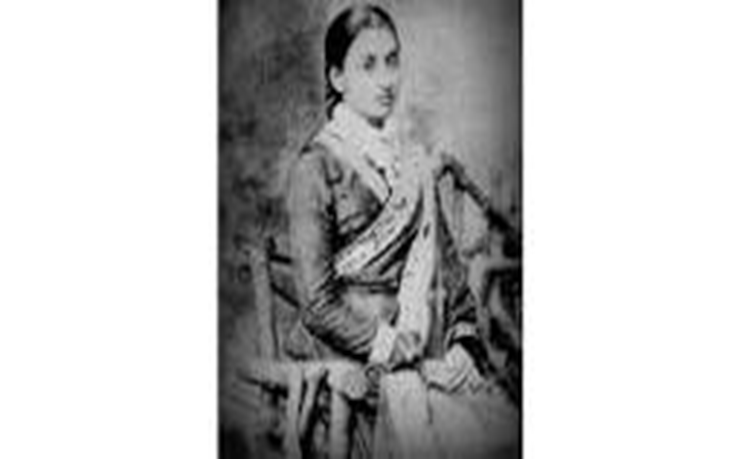
Source: Google


Leave a Reply